Should You Use AI in Customer Service and Other Communication-Related Tasks? And If Yes, How?
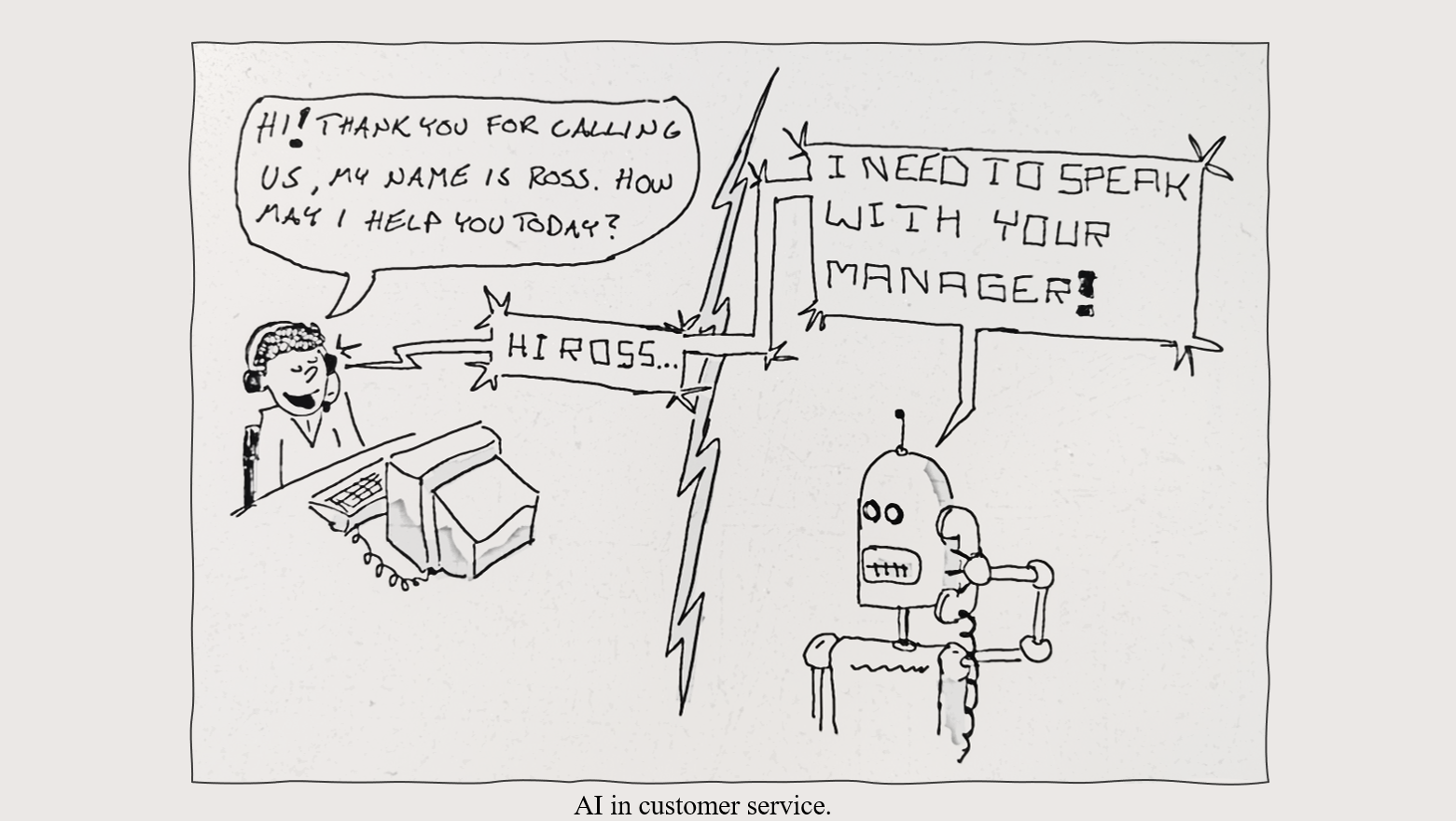
AI offers real potential to improve customer service — but introducing it carelessly erodes exactly the trust that good customer service is supposed to build. The answer to "should you?" is almost always yes. The answer to "how?" requires more thought.
The Potential Is Real
Customer service has traditionally been one of the last areas organisations consider for automation — for good reason. It is inherently human. Customers reach out when something has gone wrong, when they are confused, or when they need reassurance. Those are not moments that respond well to feeling like you have been handed to a machine.
And yet, the pressure on customer service teams is growing. Volumes are increasing. Response time expectations are shortening. The 9-to-5 support window is no longer acceptable in a world where customers interact with businesses at any hour. The question is not whether AI has a role here — it does — but how to introduce it without damaging the customer relationship.
AI can meaningfully improve self-service capabilities. It can handle high-volume, routine enquiries — order status, return policies, product information, account questions — with speed and consistency that a human team cannot match at scale. For these interactions, AI does not represent a downgrade in service. It often represents a significant improvement over waiting hours for a human to respond to a simple question.
Transparency Is Non-Negotiable
The first rule of using AI in customer-facing communication is simple: do not hide it.
Customers have a right to know when they are interacting with an AI system rather than a human. Concealing this is not just ethically questionable — it actively backfires. When customers discover (and they do discover) that what they thought was a human conversation was automated, the damage to trust is disproportionate to whatever short-term benefit the deception provided.
Transparency does not mean the AI has to be cold, robotic, or obviously mechanical in its communication. AI systems can be warm, well-written, and genuinely helpful while being fully honest about what they are. The goal is not to trick customers into thinking they are talking to a human — it is to provide them with the best possible answer as quickly as possible.
Always disclose when AI is being used. Design the AI's communication to be helpful and warm — not to impersonate a human. Customers who know they are using a well-designed AI system and have a good experience become advocates, not detractors.
Always Give Customers a Choice
The second rule: give customers a genuine option to speak with a human.
Not every customer will be satisfied by an AI response, even a good one. Some queries are inherently complex. Some customers simply prefer human contact. Some situations — a complaint, a vulnerable customer, a sensitive matter — warrant human judgment regardless of how capable the AI is.
Organisations that force customers into AI-only channels to reduce costs end up paying the price in churn and reputation. The right architecture is one where the AI handles what it handles well, and makes it genuinely easy — not buried in menus, not discouraged — for customers to escalate to a human when they want to.
This is not a concession. It is good design. Customers who feel in control of how they get support are more satisfied with the outcome, even when the AI handles the whole interaction.
Customer Attitudes Are Mixed — and Evolving
Current research shows a wide range of customer attitudes toward AI in service and communication contexts. Some customers actively prefer self-service and are frustrated by being forced to wait for a human on matters they consider straightforward. Others are deeply resistant to any AI involvement in what they consider a personal interaction.
Importantly, attitudes are evolving rapidly. Younger demographics are significantly more comfortable with AI-assisted service than older ones. Expectations differ by industry — customers may accept AI in retail support readily, but feel differently about it in healthcare or financial services where the stakes feel higher.
The implication is not to wait until attitudes are uniformly positive — they never will be. The implication is to design AI-assisted service in a way that works well for the customers who are ready to use it, while not leaving behind those who are not.
A Practical Starting Point
The organisations that will get this right are not the ones that deploy AI the fastest. They are the ones that deploy it most honestly.
For organisations thinking about where to start, the most productive approach is to identify the high-volume, low-complexity interactions that represent the bulk of your customer service load. These are typically the best candidates for AI handling — not because they are unimportant, but because they are well-defined, answerable from your existing knowledge base, and responsive to fast, accurate replies.
Start there. Be transparent. Build in the human escalation path. Measure customer satisfaction — not just deflection rates. And use what you learn to expand thoughtfully.
Turn Insights Into Action
Exploring AI for customer service? Talk to our team about how to design it right from the start.
Get in Touch →